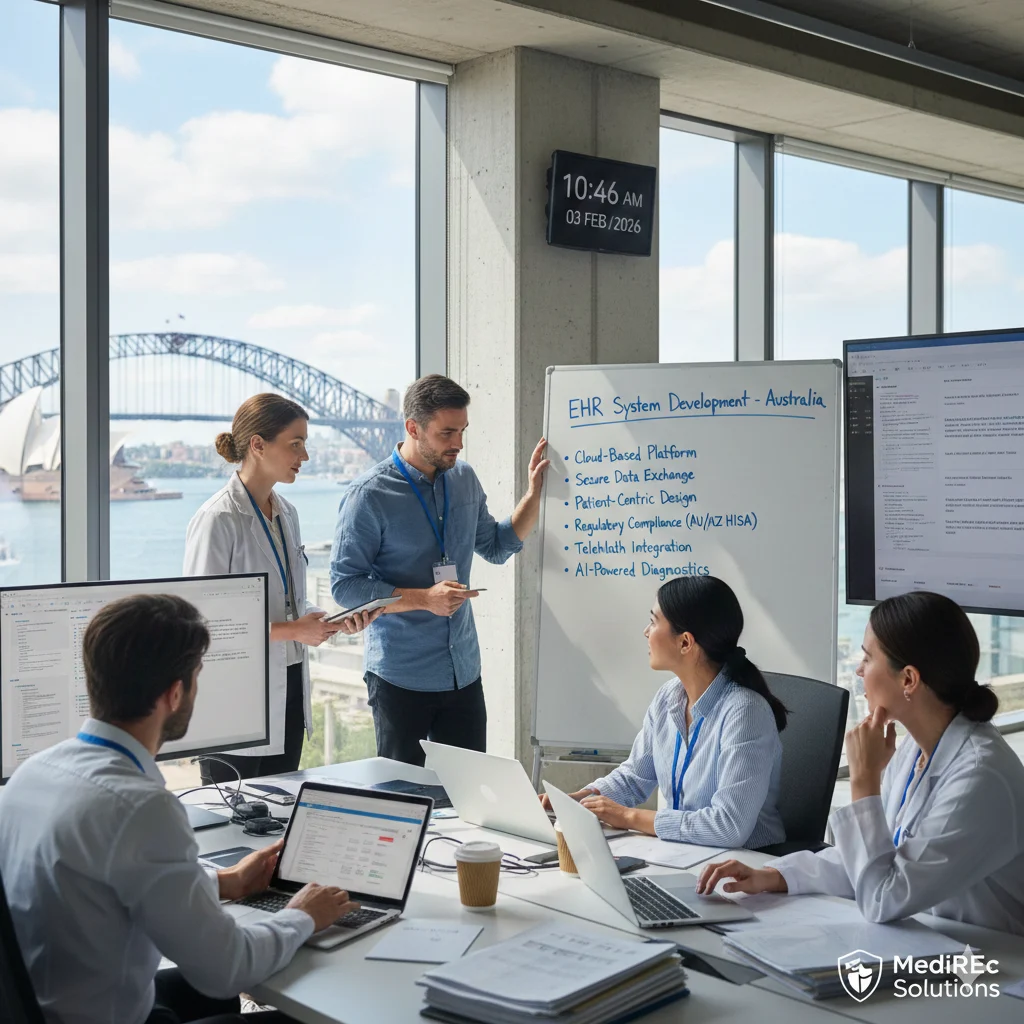

Ever heard people casually say “EHR” and nod along like it’s just another tech buzzword? On the surface, it sounds simple: “Electronic Health Records.”
But in Australia’s healthcare world today, it’s way more than just a digital filing cabinet. EHR systems now carry serious responsibility—they’re about security, privacy, compliance, and making sure patients’ data stays safe while healthcare professionals can actually use it.
If you’re diving into EHR system development, whether as a tech developer, healthcare professional, or IT manager, understanding what “compliant and secure” really means is the first step. Let’s unpack it in plain, modern terms.
What Does “EHR System Development” Mean in Practice?
At its core, EHR system development is creating digital platforms for storing, accessing, and managing patients’ health information. But it’s not just about typing up a doctor’s notes—it’s about:
- Data security: Protecting sensitive info from cyberattacks.
- Regulatory compliance: Following Australian laws like My Health Records Act 2012, Privacy Act 1988, and healthcare standards.
- User-friendliness: Doctors, nurses, and patients should actually be able to use it easily.
Think of it like designing a super-secure, fully functional Instagram for healthcare, but instead of selfies, it’s lab results, prescriptions, and medical history.
The Evolution of EHR Systems in Australia
Australia’s journey with EHRs started slow, with scattered hospital systems and paper records. Over time, the government pushed for a national standard: My Health Record.
- Early 2010s: Hospitals start digitizing, but systems aren’t connected.
- 2016 onward: National frameworks encourage interoperability.
- 2026 trend: Cloud-based, AI-enabled, secure, and fully compliant platforms dominate.
People relate to modern EHRs because they save time, reduce errors, and keep healthcare professional-patient communication smooth—all while being legally secure.
Polite, Casual & Professional Uses
EHR systems aren’t just tech jargon—they come up in multiple “conversation” styles:
- Professional: “We need our EHR to meet ISO 27799 standards before rollout.”
- Casual/Team chat: “Can you check the patient records in the new EHR? Looks way smoother than the old one.”
- Healthcare relationship: “Thanks to the EHR system, I can monitor my patient remotely and avoid unnecessary visits.”
Even in casual conversation, mentioning EHRs now signals awareness of privacy and efficiency—it’s kind of a professional flex.
Tone & Nuances
When talking about EHR development, tone matters:
- Playful: “Our EHR finally stops me from hunting for charts like a treasure map!”
- Supportive: “This system actually helps nurses reduce admin stress—love that.”
- Teasing: “Your EHR interface looks like it was made in 2005, honestly.”
- Romantic (okay, healthcare love stories exist!): “Thanks to the EHR alerts, I remembered your prescription refill—true love!”
- Sarcastic: “Oh sure, let’s just make patient data unhackable in five minutes…”
Modern EHR conversation balances seriousness with human relatability.
Why EHR Systems Are Big in 2026
Several factors explain the boom:
- Cultural: Australians increasingly care about privacy, health literacy, and tech adoption.
- Social media trends: Health apps and patient advocacy platforms highlight data breaches and digital safety, making secure EHRs a hot topic.
- Workplace expectations: Hospitals and clinics now expect staff to use EHRs effectively, creating a new “digital professionalism” standard.
Alternatives & Similar Concepts
For different contexts, you might also hear:
- PHR (Personal Health Record): patient-controlled version
- EMR (Electronic Medical Record): usually within a single hospital
- Clinical Information System (CIS): broader hospital management tool
- Telehealth platforms: integrate with EHRs but focus on remote care
Conclusion
EHR system development in Australia isn’t just about storing medical data—it’s a security-first, compliance-driven, user-friendly evolution of healthcare tech.
In 2026, developers, healthcare workers, and patients alike engage with these platforms casually, professionally, and even playfully.
Understanding EHRs today means knowing how they protect sensitive information, streamline workflows, and support modern healthcare culture.
Whether you’re a techie building the next secure platform or a patient navigating your My Health Record, EHR systems are now part of everyday healthcare conversation—and they’re here to stay.