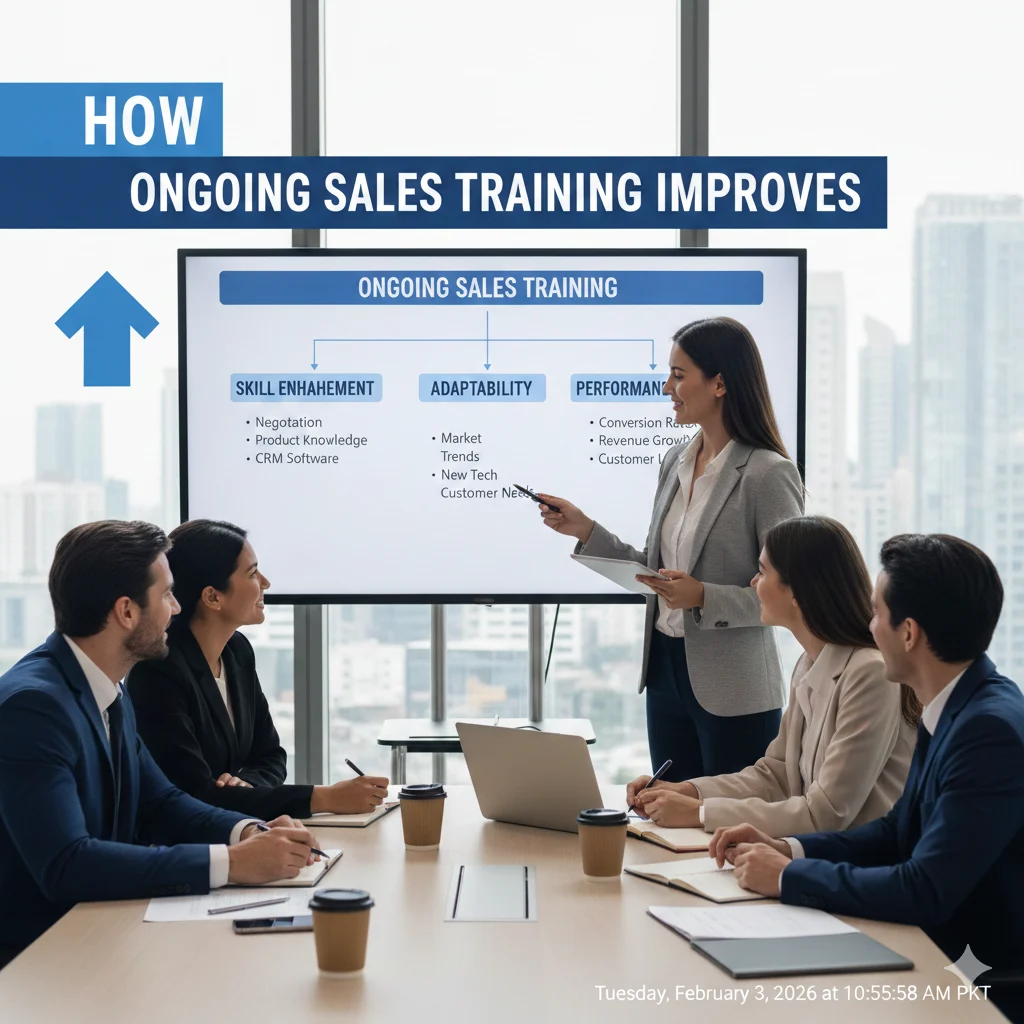

In the fast-paced world of sales, “training” might sound like a boring workshop or a long Zoom session—but ongoing sales training today is nothing like that.
It’s dynamic, interactive, and directly tied to boosting revenue and sharpening team performance. Think of it as upgrading your team’s superpowers: the more they practice, learn, and adapt, the better they perform—and yes, the more deals they close.
Sales training isn’t just for new hires anymore. Even seasoned pros benefit from regular skill refreshers, new techniques, and the latest insights into buyer behavior. Let’s break down why ongoing sales training matters and how it translates into real results.
What Does Ongoing Sales Training Really Mean?
Definition:
Ongoing sales training is the continuous education of sales teams to improve skills, strategies, and techniques. Unlike a one-off session, it happens regularly, through workshops, role-playing, coaching, and microlearning.
Emotional & Personality Meaning:
It shows that a company values growth, adaptability, and excellence. Teams feel empowered, confident, and motivated when they see investment in their development.
Where It Happens:
- Internal company workshops and virtual sessions
- Sales team chat groups (Slack, Teams)
- CRM-integrated learning platforms
- Microlearning apps and bite-sized video modules
The Evolution of Ongoing Sales Training
Sales training has come a long way. It used to be all about scripts and quotas. Today, it’s a mix of psychology, tech, and social insights:
- From rigid to flexible: Modern training adapts to individual team members’ learning styles.
- Tech-driven: AI and gamification make learning more engaging.
- Socially informed: Teams learn techniques inspired by viral trends, social selling, and online buyer behavior.
People relate to it because it’s practical and instantly applicable. The best training sessions don’t just teach theory—they show reps how to close deals faster and better.
Polite, Casual & “Relationship-style” Uses
Sales training applies differently depending on context.
Professional Examples:
- “We need ongoing training to hit our Q2 revenue goals.”
- “Quarterly role-plays have boosted our conversion rates by 15%.”
Friend Chat Examples:
- “I spent the afternoon in a sales workshop… not as boring as I thought!”
- “My team keeps sending me tips from the training; it actually helps.”
Relationship Examples:
- “Think of sales training like dating practice—you learn to read signals and respond confidently.”
Tone & Nuances
Ongoing sales training can be presented in multiple tones depending on the audience:
- Playful: “Sales skills unlocked: Level 2 achieved!”
- Supportive: “Let’s practice together so everyone feels confident.”
- Teasing: “Bet you didn’t know cold calls could be fun!”
- Romantic (light analogy): “Closing a deal is like winning someone’s heart—training helps.”
- Sarcastic: “Because we all love 3-hour workshops, right?”
Why Ongoing Sales Training Became Popular in 2026
- Cultural reasons: Companies now value continuous learning and employee engagement more than ever.
- Social media trends: Microlearning and short, interactive content became viral, inspiring companies to modernize training.
- Tech adoption: AI, CRM analytics, and gamification make training more effective and measurable.
Alternatives & Similar Concepts
- Microlearning: Bite-sized modules for quick skill boosts.
- Peer coaching: Learning from teammates’ experiences.
- Social selling workshops: Training based on social media behavior.
- Gamified learning: Making training competitive and fun.
- VR/AR simulations: Practice pitches in virtual environments.
Conclusion
Ongoing sales training isn’t just a corporate buzzword—it’s a proven way to improve revenue, team confidence, and overall performance.
Companies that invest in continuous learning see better conversions, more motivated employees, and a culture of growth.
Whether through interactive workshops, microlearning modules, or social selling insights, modern sales training equips teams to adapt, excel, and outperform competitors. In 2026, keeping your team’s skills sharp isn’t optional—it’s essential.