
If you’ve spent any time chatting online, scrolling through comments, or reading social media posts, you’ve probably seen the term “NGL.” It pops up everywhere—messages, captions, memes—and for many people, especially beginners, it can feel confusing at first.
So what exactly does it mean? Why do people use it? And how should you use it in your own messages without sounding awkward?
Let’s break it all down in a simple, clear, and real-world way.
What Does NGL Mean?
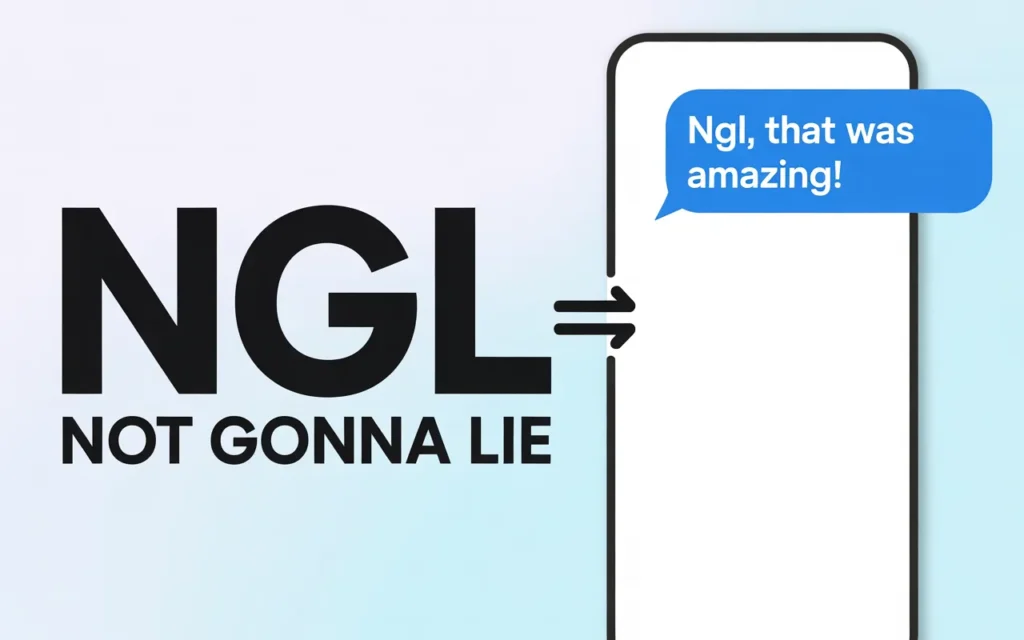
NGL stands for “Not Gonna Lie.”
It’s a casual phrase people use in text messages, chats, or social media when they want to be honest about something—sometimes bluntly, sometimes playfully.
You can think of it as a way of saying:
- “To be honest…”
- “I’m not hiding this…”
- “This is my real opinion…”
Simple Example of NGL in a Sentence
Here’s a quick example so you can understand it instantly:
- NGL, that movie was boring.
- NGL, I really like your new profile picture.
- NGL, I didn’t expect that to happen.
In all these cases, the person is sharing an honest opinion or feeling.
Why People Use NGL in Texting
People use NGL for a few simple reasons:
1. To Sound Honest
Adding NGL makes your message feel more real and genuine.
- NGL, I was nervous before the test.
It shows you’re being open.
2. To Soften Opinions
Sometimes people use it before saying something slightly critical or unexpected.
- NGL, I liked the old version better.
It helps reduce how harsh the comment sounds.
3. To Add Personality
Online conversations can feel flat. NGL adds a human touch.
- NGL, that made me laugh more than it should have.
4. To Be Relatable
It makes your message feel casual and relatable—like you’re talking to a friend.
Where You’ll See NGL Most Often
NGL is widely used across many platforms. Here’s where it appears the most:
Social Media Posts
People use it in captions or comments:
- NGL, this is my favorite place.
- NGL, I needed this break.
Text Messages
In chats with friends or family:
- NGL, I forgot your birthday.
- NGL, I miss those days.
Online Forums & Comments
Used to share opinions:
- NGL, this guide actually helped me.
Memes & Reactions
It’s often part of funny or relatable content:
- NGL, this is so accurate.
Different Ways NGL Is Used
Even though it has one main meaning, the tone can change depending on how it’s used.
1. Honest Confession
- NGL, I didn’t study at all.
2. Compliment
- NGL, you look great in that outfit.
3. Criticism
- NGL, that idea needs work.
4. Surprise Reaction
- NGL, I didn’t see that coming.
5. Humor
- NGL, I laughed way too hard at that.
Is NGL Always Serious?
Not really.
Sometimes people use it seriously, but often it’s just part of casual conversation. It doesn’t always mean something deep—it can be light, funny, or even exaggerated.
For example:
- NGL, I could eat pizza every day.
This doesn’t mean the person literally will—it’s just expressive.
When Should You Use NGL?
Using NGL is easy once you understand the vibe.
Good Situations to Use It
- Talking to friends
- Social media captions
- Casual chats
- Sharing opinions
Situations to Avoid
- Formal emails
- Professional conversations
- Academic writing
Instead of NGL in formal writing, use:
- “Honestly”
- “To be honest”
- “In my opinion”
NGL vs Similar Slang Terms
There are a few other slang phrases that are similar. Let’s compare them.
NGL vs TBH (To Be Honest)
- Both mean honesty
- TBH is slightly older and more common
Example:
- TBH, I agree with you.
- NGL, I agree with you.
They’re very similar—you can usually swap them.
NGL vs IMO (In My Opinion)
- IMO focuses on opinion
- NGL focuses on honesty
Example:
- IMO, this is better. (opinion)
- NGL, this is better. (honest feeling)
NGL vs FR (For Real)
- FR shows agreement or seriousness
- NGL introduces honesty
Example:
- That was good, FR.
- NGL, that was good.
Real-Life Chat Examples
Here’s how people naturally use NGL in conversations:
Chat Example 1:
- Friend 1: Did you like the game?
- Friend 2: NGL, it was kind of disappointing.
Chat Example 2:
- Friend 1: How do I look?
- Friend 2: NGL, you look amazing.
Chat Example 3:
- Friend 1: Are you tired?
- Friend 2: NGL, I barely slept.
Is NGL Rude?
Not by itself.
But it can feel rude depending on what comes after it.
Neutral:
- NGL, I like this.
Slightly Harsh:
- NGL, this is bad.
Very Harsh:
- NGL, this is terrible.
So the tone depends on the message, not the abbreviation itself.
Tips to Use NGL Naturally
If you want to sound natural (not forced), follow these tips:
Keep It Casual
Don’t overthink it.
- ✔ NGL, I enjoyed that.
- ✘ NGL, I would like to formally state…
Don’t Overuse It
Using it in every sentence feels unnatural.
- ✔ Use it occasionally
- ✘ NGL in every message
Match the Conversation Tone
If the chat is serious, be careful with slang.
Why NGL Became So Popular
There are a few reasons this slang spread so quickly:
1. Short and Easy
People prefer quick typing—NGL saves time.
2. Fits Online Culture
It matches the casual tone of social media.
3. Feels Authentic
In a world full of filters and edits, people like sounding real.
Common Mistakes People Make
Here are some mistakes beginners often make:
1. Using It in Formal Situations
Avoid using it in emails or professional messages.
2. Misunderstanding Tone
Just because it says “not gonna lie” doesn’t mean you should be harsh.
3. Overusing It
Using it too much makes it lose impact.
Variations of NGL
Sometimes people mix it with other phrases:
- NGL tho… (Not gonna lie though)
- Ngl (lowercase—same meaning)
- NGL 😭 (adds emotion)
All of these mean the same thing but change the tone slightly.
Is NGL Still Trending?
Yes, NGL is still widely used in 2026.
It hasn’t disappeared like some older slang because:
- It’s simple
- It’s useful
- It fits everyday conversation
Unlike trends that come and go, NGL has become part of normal online language.
Final Thoughts
NGL is one of those internet terms that looks confusing at first but becomes very simple once you understand it.
At its core, it just means “Not Gonna Lie”—a casual way to be honest, share your opinion, or express how you really feel.
You’ll see it everywhere: texts, comments, captions, and even memes. And once you start noticing it, you’ll realize how often people use it in everyday conversation.
If you’re new to online slang, this is a great place to start. Just remember:
Discover More Post
New Year Puns for 2025: 500+ Fresh, Funny & Pun – Punsze –
145+ Yo Mama Jokes 2025: The Ultimate Collection for Laughs