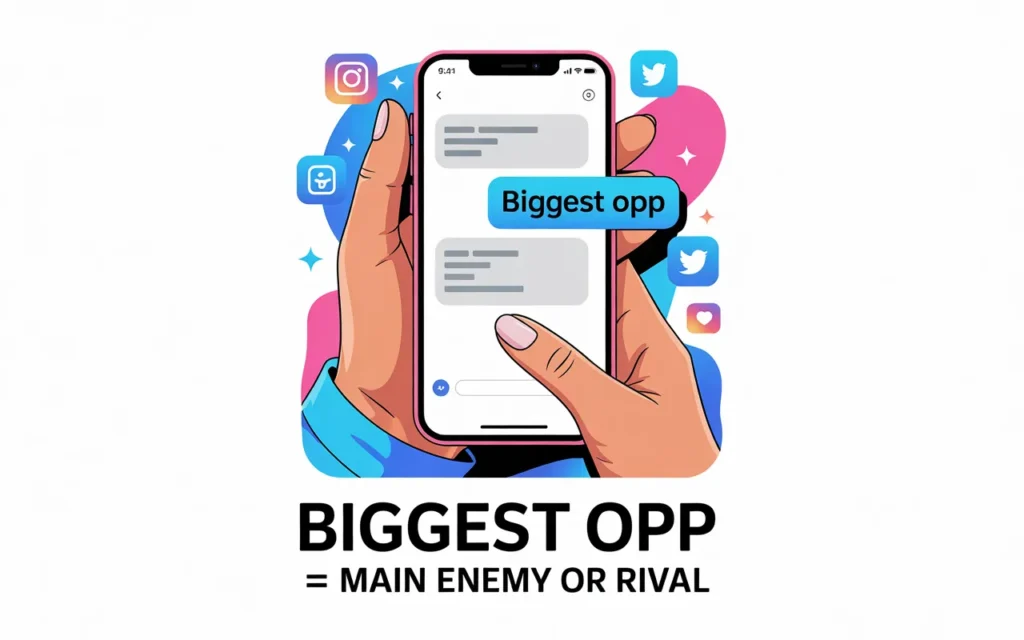

If you’ve spent even a little time scrolling through social media, texting friends, or watching viral videos, you may have seen the phrase “biggest opp” pop up. It’s one of those slang terms that feels obvious in context—but confusing when you stop and think about it.
So what does it actually mean? Where did it come from? And how should you use it without sounding out of place?
This guide breaks everything down in simple, clear language. By the end, you’ll understand the meaning, the vibe behind it, and how people really use it in everyday conversations.
What Does “Biggest Opp” Mean?
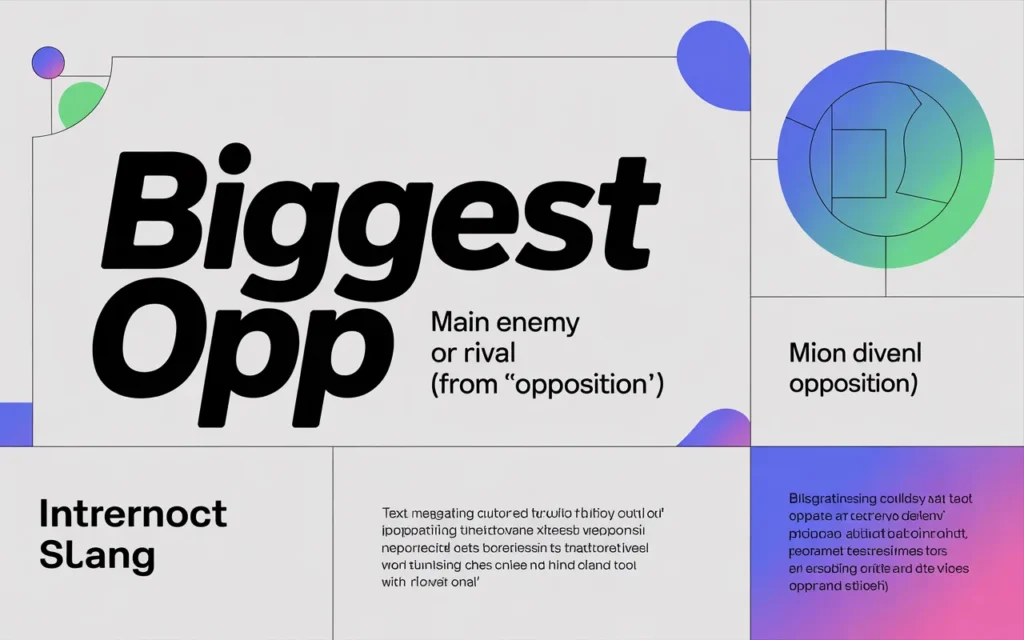
At its core, “biggest opp” means:
Your biggest enemy, rival, or someone strongly against you
The word “opp” is short for “opposition” or “opponent.” When someone says “biggest opp,” they’re talking about the person who is most against them—whether seriously or jokingly.
Simple Definition:
- Opp = Enemy / rival / someone against you
- Biggest opp = Your main enemy or top rival
But here’s where it gets interesting: not every use of the phrase is serious.
The Two Main Meanings (Serious vs Funny)
Like many internet slang terms, “biggest opp” can be used in different ways depending on the situation.
1. Serious Meaning
In some contexts—especially in music or street culture—it refers to a real enemy.
Example:
- “He’s my biggest opp. I don’t mess with him.”
Here, the speaker means someone they genuinely dislike or have conflict with.
2. Funny or Casual Meaning (Most Common Today)
On social media, people often use it in a playful or exaggerated way.
Example:
- “My alarm clock is my biggest opp.”
- “Monday mornings are my biggest opp.”
In these cases, it doesn’t mean a real enemy—it’s just a humorous way of saying something is annoying or difficult.
Where Did “Opp” Come From?
The term “opp” originally comes from urban slang, especially in hip-hop culture. It was used to describe rivals, enemies, or people from opposing groups.
Over time, the word moved beyond music and became popular online. Now, it’s used everywhere—from TikTok captions to casual text messages.
As slang spreads, its meaning becomes more flexible—and that’s exactly what happened here.
Why “Biggest Opp” Became So Popular
There are a few reasons why this phrase caught on so quickly:
1. It’s Short and Catchy
People love quick expressions. “Biggest opp” is fast to type and easy to understand.
2. It’s Dramatic (in a Fun Way)
Calling something your “biggest opp” adds a bit of humor and exaggeration.
Instead of saying:
- “I don’t like waking up early”
You say:
- “Waking up early is my biggest opp”
It instantly sounds more expressive.
3. Social Media Trends
Platforms like TikTok and Instagram helped spread the phrase quickly through memes and videos.
How to Use “Biggest Opp” in Text
Using the phrase is simple once you understand the tone. It usually fits into casual conversations.
Common Sentence Examples
Here are some real-life style examples:
- “Bro, deadlines are my biggest opp right now.”
- “He used to be my friend, now he’s my biggest opp.”
- “This heat is my biggest opp today.”
- “My WiFi acting slow is my biggest opp.”
- “Leg day at the gym is my biggest opp.”
Funny Uses You’ll See Online
Most people today use the phrase in a joking way. Here are some relatable examples:
- “My bed is my biggest opp when I need to wake up.”
- “Dieting is my biggest opp.”
- “Group projects are my biggest opp.”
- “My phone battery dying at 2% is my biggest opp.”
It’s all about exaggerating everyday struggles.
“Biggest Opp” vs Similar Slang Terms
To fully understand the phrase, it helps to compare it with similar slang.
1. Opp
- Basic version
- Means enemy or rival
Example:
- “He’s an opp.”
2. Biggest Opp
- Stronger version
- Your main or worst enemy
Example:
- “He’s my biggest opp.”
3. Hater
- Someone who dislikes or criticizes you
Example:
- “Ignore the haters.”
Difference:
A hater might not directly oppose you, but an opp feels more active or serious.
4. Rival
- Someone competing with you
Example:
- “They’re my rival at work.”
Difference:
A rival isn’t always negative—but an “opp” usually is.
When You Should (and Shouldn’t) Use It
Good Situations
Use it when:
- Talking casually with friends
- Posting on social media
- Making jokes about daily struggles
Situations to Avoid
Avoid using it in:
- Formal writing
- Professional emails
- Academic settings
It’s slang—so it belongs in relaxed, informal conversations.
Tone Matters: Serious vs Playful
The meaning of “biggest opp” depends heavily on tone.
Serious Tone
- “He’s my biggest opp.”
→ Real conflict or dislike
Playful Tone
- “Homework is my biggest opp.”
→ Clearly a joke
Always read the situation before using it.
How It’s Used on Social Media
You’ll often see “biggest opp” in captions, comments, and memes.
Typical Social Media Examples
- Caption under a messy desk:
“Organization is my biggest opp.” - Gym post:
“Cardio is my biggest opp.” - Late-night post:
“Sleep schedule is my biggest opp.”
The phrase works well because it’s relatable and funny.
Why People Love Using It
There’s something satisfying about turning small problems into “enemies.”
It:
- Makes everyday struggles feel dramatic (in a fun way)
- Helps people relate to each other
- Adds humor to normal situations
It’s basically storytelling—but in one short phrase.
Common Mistakes to Avoid
Even simple slang can be used incorrectly. Here are a few things to watch out for:
1. Using It Too Seriously in Casual Situations
If you say:
- “My biggest opp is pizza”
Don’t expect people to take you seriously—it’s clearly a joke.
2. Using It in Formal Conversations
Avoid:
- “My biggest opp is deadlines” (in a job interview)
Instead say:
- “I find deadlines challenging”
3. Overusing It
Like any slang, using it too often can feel repetitive.
Mix it up with other expressions.
Variations You Might See
People sometimes tweak the phrase for style or humor.
Examples:
- “Main opp”
- “Big opp”
- “Number one opp”
- “Certified opp”
They all carry similar meanings but with slightly different tones.
Is “Biggest Opp” Positive or Negative?
It depends on context.
Negative Meaning
- Refers to conflict or dislike
Neutral/Funny Meaning
- Just a joke about something annoying
Most modern uses are lighthearted, not serious.
Real-Life Conversation Examples
Here’s how it might sound in real conversations:
Friend 1:
“I have three exams tomorrow.”
Friend 2:
“Yeah, exams are your biggest opp right now.”
Friend 1:
“My phone died again.”
Friend 2:
“Low battery is your biggest opp.”
Friend 1:
“I can’t stop eating snacks.”
Friend 2:
“Self-control is your biggest opp.”
Why Understanding Slang Like This Matters
Slang is more than just words—it’s part of how people connect.
Knowing phrases like “biggest opp” helps you:
- Understand online conversations better
- Stay up to date with trends
- Communicate more naturally with others
It’s like learning a new layer of language.
Quick Recap
Let’s simplify everything:
- Opp = opponent or enemy
- Biggest opp = your main enemy or biggest struggle
- Often used jokingly on social media
- Best for casual conversations, not formal ones
Final Thoughts
“Biggest opp” is a perfect example of how language evolves online. What started as a serious term has turned into a flexible, often funny way to describe everyday struggles.
Whether you’re talking about a real rival or just your alarm clock, the phrase adds personality to your words.
Just remember: context is everything. Use it casually, keep it natural, and you’ll fit right in with how people use it today.
Discover More Post
385 Garbage🗑️ Puns That Are Waste-fully Funny
295 Coke Puns That Will Fizz Up Your Day with Laughter!