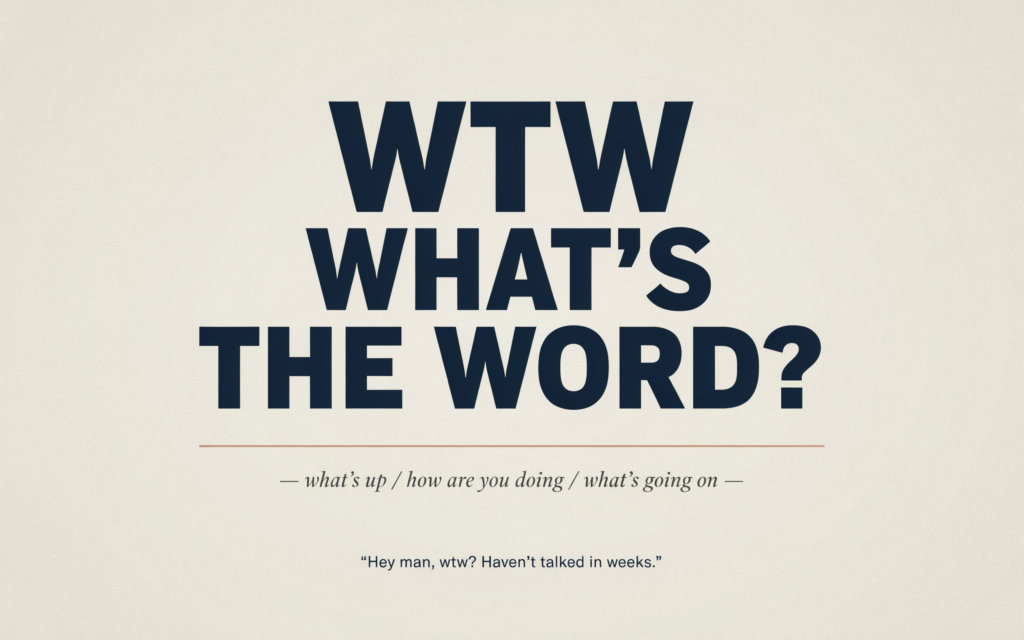

If you’ve spent even a little time on social media or chatting with friends online, you’ve probably come across the short and slightly confusing phrase “WTW.” At first glance, it might look like just another random internet abbreviation. But like most slang, it actually carries meaning—sometimes more than one.
In this guide, we’ll break it down in simple terms. You’ll learn what it means, how people use it in real conversations, where it came from, and how to reply when someone sends it to you.
What Does WTW Mean?
WTW usually stands for:
👉 “What’s the word?”
In everyday language, this is just a casual way of asking:
- What’s going on?
- What are you doing?
- Any plans?
- What’s up?
It’s friendly, informal, and often used to start a conversation or check in with someone.
The Real Meaning in Simple Words
Think of WTW as a digital version of:
“Hey, what’s happening?”
It doesn’t have a deep or complicated meaning. Instead, it’s more about opening the door to a conversation.
People use it when they want to:
- Hang out
- Make plans
- Catch up
- See if you’re available
It’s short, quick, and fits perfectly into fast texting culture.
How WTW Is Used in Text Messages
Here are some real-life style examples to help you understand how it works:
Example 1: Making Plans
Friend: WTW tonight?
You: Not much, maybe watching a movie. You?
👉 Meaning: “What are you doing tonight?”
Example 2: Casual Check-In
Friend: WTW bro
You: Just chilling at home
👉 Meaning: “What’s up?”
Example 3: Starting a Conversation
Person: WTW?
You: Nothing much, just finished work
👉 Meaning: “What’s going on?”
Example 4: Invitation in Disguise
Friend: WTW this weekend?
You: Free on Saturday
👉 Meaning: “Do you want to hang out?”
Different Meanings of WTW (Depending on Context)
While “What’s the word?” is the most common meaning, context matters. Sometimes, the tone of the conversation changes how it’s understood.
1. Asking About Plans
This is the most common use.
👉 “WTW later?” = “What are your plans later?”
2. Checking Availability
It can also mean:
👉 “Are you free?”
👉 “Can we hang out?”
3. Asking for Updates
Sometimes it’s used like:
👉 “Any news?”
👉 “What’s happening?”
4. Flirty or Friendly Opening
In some cases, it’s used to casually start a chat—especially in dating or social apps.
👉 “WTW 😉” = “Hey, what are you up to?”
Where Did WTW Come From?
WTW comes from spoken slang, especially in casual conversations. The phrase “What’s the word?” has been used for years, particularly in urban and youth culture.
As texting and social media became more popular, people shortened it to save time. That’s how it turned into WTW.
This is similar to how other phrases evolved:
- “What’s up?” → “Wassup” → “Sup”
- “Be right back” → “BRB”
- “Talk to you later” → “TTYL”
It’s all about speed and convenience.
Why People Use WTW Instead of Full Sentences
You might wonder: why not just type the full question?
Here’s why WTW is so popular:
1. It’s Fast
Typing three letters is quicker than typing a full sentence.
2. It Feels Casual
Short slang makes conversations feel relaxed and friendly.
3. It Fits Modern Chat Culture
People prefer quick, informal communication—especially on platforms like:
- Messaging apps
- Social media
- Gaming chats
4. It Leaves Room for Conversation
WTW is open-ended. It lets the other person respond however they want.
How to Reply to WTW
Not sure what to say when someone sends “WTW”? Here are some easy responses.
If You’re Busy
- “Just working right now”
- “Got a lot going on today”
- “Busy, maybe later”
If You’re Free
- “Nothing much, what’s up?”
- “I’m free, what do you have in mind?”
- “Just chilling”
If You Want to Hang Out
- “Not much, let’s do something”
- “I’m down, what’s the plan?”
- “Free tonight 👀”
If You Don’t Want to Talk Much
- “Just relaxing”
- “Same old stuff”
- “Nothing interesting”
WTW on Social Media
WTW isn’t just used in texts—it shows up everywhere online.
Instagram & Snapchat
People use it in DMs or stories:
- “WTW tonight?”
- “WTW this weekend?”
TikTok
In comments or captions, it can mean:
- “What’s going on?”
- “What’s the vibe?”
Twitter (X)
Used casually to check in or start conversations.
Is WTW Formal or Informal?
WTW is very informal.
You should only use it with:
- Friends
- Classmates
- People your age
- Casual online conversations
Avoid using it in:
- Job emails
- Professional messages
- Formal situations
Similar Slang to WTW
If you understand WTW, you’ll also recognize these similar expressions:
1. WYD
👉 “What you doing?”
2. WYA
👉 “Where you at?”
3. SUP / WSUP
👉 “What’s up?”
4. HMU
👉 “Hit me up”
5. WYLL
👉 “What you look like?”
All of these serve similar purposes: starting conversations quickly.
Common Mistakes When Using WTW
Even though it’s simple, people sometimes misuse it.
1. Using It in Formal Settings
❌ “WTW about the meeting?”
✔ Use full sentences instead.
2. Overusing It
If you send WTW all the time, it can feel lazy or repetitive.
3. Misreading the Tone
Sometimes WTW is just a greeting—not always an invitation.
Is WTW Used Worldwide?
Yes, but it’s more common in:
- English-speaking countries
- Youth and online communities
- Social media users
Even in non-English speaking countries, people use it because internet slang spreads fast.
When Someone Sends WTW First
If someone texts you first with WTW, it usually means:
- They want to talk
- They’re bored
- They’re checking if you’re free
- They might want to hang out
The tone depends on your relationship with them.
WTW in Dating and Flirting
In dating apps or casual chats, WTW can feel slightly different.
It might mean:
- “Are you free to talk?”
- “Want to meet?”
- “What are you doing right now?”
Sometimes it carries a flirty vibe, especially with emojis.
Example:
- “WTW tonight 😏”
How Tone Changes the Meaning
Tone matters a lot in slang.
Neutral Tone
👉 “WTW?” = Just checking in
Excited Tone
👉 “WTW!!!” = Let’s do something
Flirty Tone
👉 “WTW 😉” = Interested in you
Bored Tone
👉 “wtw…” = I have nothing to do
Should You Use WTW?
It depends on your situation.
Use It If:
- You’re texting friends
- You want to keep things casual
- You’re starting a quick chat
Avoid It If:
- You’re talking to your boss
- You’re writing something formal
- You want to sound professional
Why Slang Like WTW Keeps Growing
Internet slang keeps evolving because:
- People want faster communication
- Social media encourages short messages
- New trends appear constantly
What’s popular today might change tomorrow—but some slang sticks around for years.
WTW is one of those simple phrases that’s likely to stay because it’s easy and useful.
Final Thoughts
WTW might look confusing at first, but it’s actually one of the easiest slang terms to understand.
At its core, it just means:
👉 “What’s going on?”
👉 “What are you up to?”
It’s casual, friendly, and perfect for everyday conversations.
Once you get used to it, you’ll start seeing it everywhere—and you might even start using it yourself without thinking twice.
Discover More Post
395 Denim Puns That Are Jean-ius! – Punsze –
255 Smell Puns That Really Make Scents! – Punsze –