
If you’ve ever been chatting with someone online and suddenly saw the term “FWB,” you’re not alone in wondering what it means. Internet slang moves fast, and new abbreviations show up all the time. Some are harmless, some are funny, and some—like this one—can be a bit confusing if you’re seeing it for the first time.
Let’s break it down in a simple, honest, and practical way so you fully understand what it means, how people use it in text messages, and when you should (or shouldn’t) use it yourself.
What Does FWB Mean in Text?
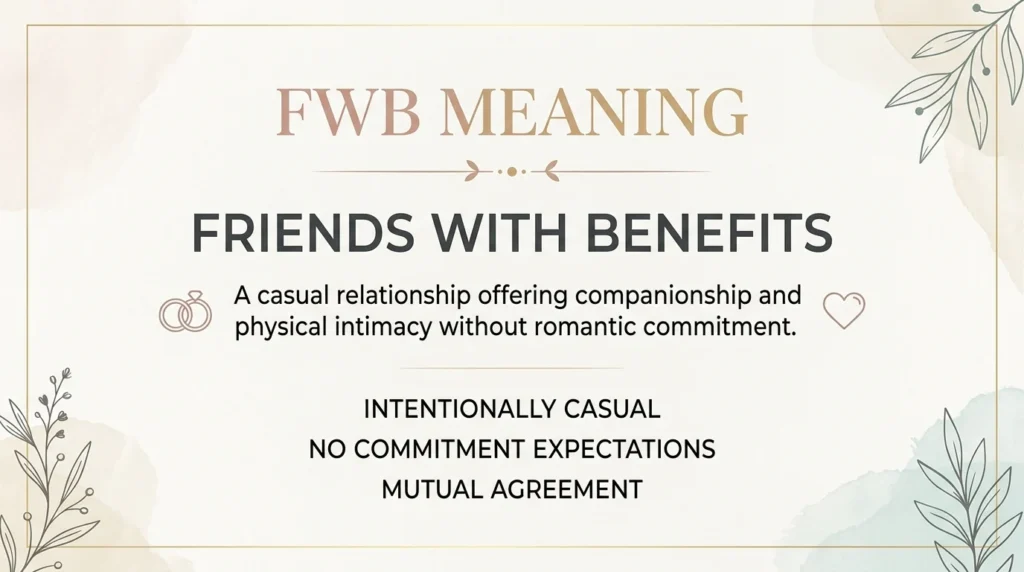
“FWB” stands for “Friends With Benefits.”
In texting and online conversations, it usually refers to a relationship where two people are friends but also have a physical or intimate connection without being in a committed romantic relationship.
In simpler terms:
- You’re friends
- You spend time together
- But there’s also a casual physical side
- Without the expectations of a serious relationship
People use this term in chats, dating apps, social media, and casual conversations.
The Simple Definition (In Everyday Language)
Think of it like this:
An FWB relationship is when two people like each other enough to hang out and be close, but they don’t want the responsibilities or commitment of dating.
There are:
- No labels like boyfriend or girlfriend
- No long-term promises
- No pressure to build a future together
It’s meant to stay casual and flexible.
Why Do People Use “FWB” in Text Messages?
The main reason is convenience. Instead of explaining a whole situation, people just type “FWB” and the other person understands right away.
It saves time and avoids long explanations.
Here are a few situations where someone might use it:
- On dating apps:
“Not looking for anything serious, maybe FWB.” - In a chat with a friend:
“We’re not dating, just FWB.” - When setting boundaries:
“I’m okay with FWB but not a relationship.”
It’s short, direct, and widely understood—especially among younger users.
Real-Life Examples of FWB in Text
To make it clearer, here are some natural examples you might see:
Example 1:
“I don’t want a relationship right now, just FWB.”
Example 2:
“We tried dating, but now we’re just FWB.”
Example 3:
“Are you looking for something serious or FWB?”
Example 4:
“FWB only, no drama please.”
Notice how the tone is usually casual and straightforward.
Where You’ll Commonly See This Term
You’re most likely to come across this slang in:
1. Dating Apps
Apps like Tinder, Bumble, or others are full of profiles using this term. People often mention it to be clear about their intentions.
2. Social Media
It may appear in captions, comments, or memes where people joke about modern relationships.
3. Text Messages
Friends or acquaintances might use it while discussing relationships or personal situations.
4. Online Forums & Chats
It’s common in discussions about dating, relationships, and lifestyle choices.
Is FWB the Same as Dating?
No, and this is where many people get confused.
Here’s the key difference:
Dating:
- Emotional connection
- Commitment
- Future plans
- Exclusivity (usually)
FWB:
- Casual connection
- No commitment
- No expectations for the future
- Often not exclusive
So while both involve spending time together, the intentions are completely different.
Why Do People Choose an FWB Arrangement?
People choose this kind of relationship for different reasons. It’s not one-size-fits-all.
Some common reasons include:
1. They’re Not Ready for Commitment
Maybe they just got out of a relationship or want to focus on other things like career or studies.
2. They Want Something Casual
Some people simply prefer a relaxed connection without emotional pressure.
3. They Value Independence
They enjoy companionship but don’t want their life tied to someone else.
4. They Already Have a Friendship
Sometimes two friends develop physical attraction but don’t want to change the dynamic into a full relationship.
Important Things to Understand Before Using This Term
This isn’t just another harmless slang word. It carries meaning that affects real relationships.
Here are a few important points:
1. It Requires Clear Communication
Both people need to understand what they want. Misunderstandings can lead to hurt feelings.
2. Emotions Can Still Develop
Even if the intention is casual, feelings can grow over time. This is one of the biggest challenges.
3. Boundaries Matter
Healthy boundaries are essential to avoid confusion and conflict.
4. It’s Not for Everyone
Some people prefer meaningful, committed relationships. And that’s completely valid.
Common Misunderstandings About FWB
Let’s clear up a few myths:
“It means no feelings at all”
Not true. Feelings can still happen, even if they’re not planned.
“It’s always simple”
In reality, it can get complicated if expectations aren’t aligned.
“Everyone is okay with it”
Some people are, some aren’t. It depends on personal values and comfort levels.
When Someone Texts You “FWB” – How Should You Respond?
If someone brings this up in a conversation, don’t feel pressured to agree or respond quickly.
Here are a few ways to handle it:
If You’re Interested:
“I’m open to that, but let’s talk about boundaries first.”
If You’re Unsure:
“I’m not sure, I’d need to think about it.”
If You’re Not Interested:
“That’s not really what I’m looking for.”
It’s always okay to be honest and clear about your preferences.
Similar Slang Terms You Might See
FWB isn’t the only term used to describe casual relationships. Here are a few related ones:
- “Hookup” – Usually refers to a one-time or short-term casual encounter
- “Situationship” – A relationship that’s undefined or unclear
- “No strings attached” (NSA) – Similar to FWB but often more casual
- “Talking stage” – Early phase of getting to know someone
Each term has slightly different meaning, but they all fall under modern dating language.
Is It Appropriate to Use “FWB” in Every Situation?
Not really.
This term is best used in casual, informal conversations. It’s not appropriate for:
- Professional settings
- Conversations with people you don’t know well
- Formal writing or communication
Always consider the context before using it.
How the Meaning Has Evolved Over Time
The idea behind FWB isn’t new. Casual relationships have existed for a long time. But the term became popular with texting culture and online dating.
Today, it’s widely recognized and understood across many platforms. Social media has played a big role in spreading and normalizing it.
Pros and Cons of an FWB Arrangement
To give you a balanced view, here are some general advantages and disadvantages:
Pros:
- Less pressure than a relationship
- Flexibility and independence
- Can be enjoyable if both people agree
Cons:
- Risk of emotional attachment
- Possible misunderstandings
- Can affect friendship
This is why communication and honesty are so important.
Final Thoughts
“FWB” is one of those modern slang terms that sounds simple but carries a lot of meaning.
At its core, it describes a casual relationship between friends with a physical aspect but no commitment. You’ll see it often in texts, dating apps, and social media conversations.
If you ever come across it, now you know exactly what it means—and more importantly, how to respond in a way that fits your comfort level.
There’s no right or wrong choice when it comes to relationships. What matters is understanding the term, knowing your boundaries, and making decisions that feel right for you.
Discover More Post
295 Asphalt Puns That Will Have You Driving with Laughter!
Fat Jokes 2025 That Are Funny, Clever, and (Mostly) Friendly
809+ Ligma Jokes That’ll Crack You Up (2025) – Punsze –