If you’ve ever been chatting online or texting someone and suddenly saw “TTYL,” you might have paused and wondered what it actually means. Is it something serious? Friendly? Or just another confusing piece of internet slang?
You’re not alone. Short forms like this are everywhere—especially in texting, social media, and messaging apps. The good news is that “TTYL” is simple, friendly, and easy to use once you understand it.
In this guide, you’ll learn the real meaning, where it came from, how people use it today, and how to use it naturally in your own conversations.
What Does TTYL Mean?
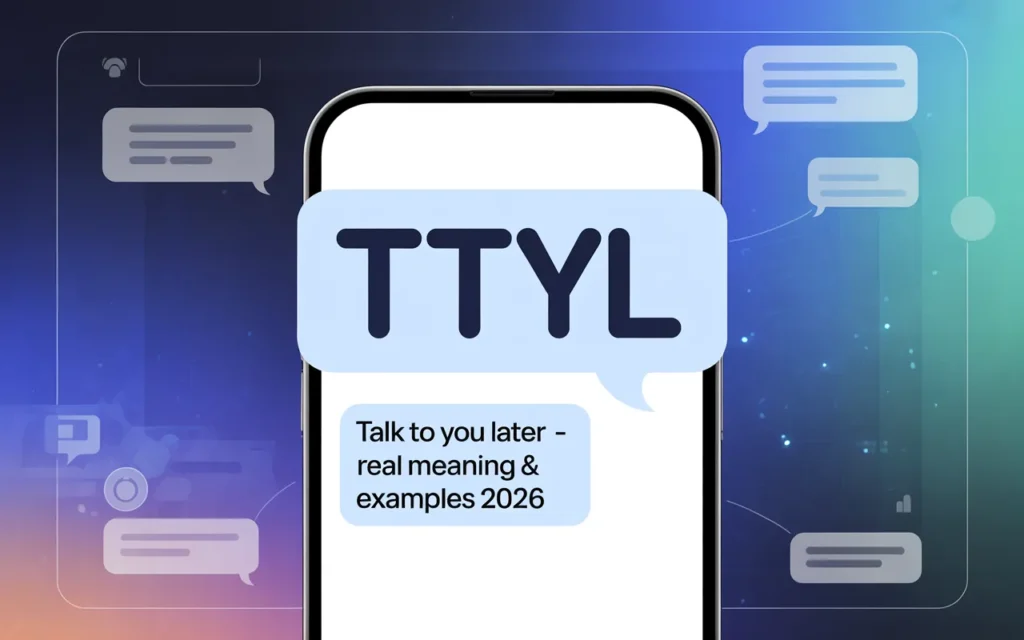
TTYL stands for “Talk To You Later.”
It’s a casual way of ending a conversation, especially in text messages or online chats. When someone says it, they’re basically saying:
- “I’ll message you again later.”
- “We’ll continue this conversation another time.”
- “I’m leaving for now, but we’ll talk soon.”
It’s not rude or dismissive. In fact, it’s usually friendly and polite.
Why Do People Use TTYL?
The main reason is speed and convenience.
Typing full sentences takes time. Short forms like TTYL make communication faster, especially when:
- You’re busy
- You’re chatting casually
- You’re using your phone
- You want to end a conversation quickly but politely
It’s part of a larger trend of internet shorthand, where people shorten common phrases.
Is TTYL Formal or Informal?
TTYL is informal.
You should use it in:
- Text messages
- Social media chats
- Conversations with friends
- Casual online discussions
You should avoid it in:
- Work emails
- Formal messages
- Academic writing
- Professional communication
Instead, in formal settings, you can say:
- “I’ll talk to you later.”
- “Let’s continue this later.”
- “Speak with you soon.”
Real-Life Examples of TTYL
To understand how it’s used, here are some simple, everyday examples:
Example 1:
Friend: I need to go eat dinner
You: Okay, ttyl!
Example 2:
You: I have a meeting now
Them: No problem, ttyl
Example 3:
Friend: I’ll message you after class
You: Sure, ttyl 😊
Notice how it’s usually placed at the end of a conversation.
Tone and Feeling Behind TTYL
TTYL is generally:
- Friendly
- Relaxed
- Neutral
- Positive
It doesn’t carry any negative meaning. It simply shows that the conversation is pausing, not ending forever.
Sometimes, people even add emojis to make it warmer:
- ttyl 🙂
- ttyl ❤️
- ttyl bro
Where Did TTYL Come From?
TTYL became popular during the early days of internet chat rooms and instant messaging, especially in the late 1990s and early 2000s.
Platforms like:
- MSN Messenger
- AOL Instant Messenger (AIM)
- Yahoo Messenger
encouraged quick typing, and that’s where abbreviations like TTYL, BRB, and LOL became common.
Over time, it moved from desktop chats to:
- SMS texting
- Snapchat
And it’s still widely used today.
TTYL vs Similar Slang Terms
TTYL is not the only phrase people use to end conversations. Here are a few similar ones:
1. BRB (Be Right Back)
Used when you’re leaving briefly but coming back soon.
2. GTG (Got To Go)
Means you need to leave immediately.
3. CU (See You)
A shorter version of “see you.”
4. L8R (Later)
A very short and casual way to say goodbye.
5. Bye / Cya
Simple and direct alternatives.
Difference:
- TTYL suggests you’ll talk again later
- GTG focuses on leaving now
- BRB suggests a short break
How to Use TTYL Correctly
Using TTYL is easy, but here are a few tips to sound natural:
1. Use it at the end of a conversation
Don’t drop it randomly in the middle.
2. Keep it casual
Use it with people you’re comfortable with.
3. Match the tone
If the conversation is friendly, TTYL fits perfectly.
When NOT to Use TTYL
Even though it’s common, there are situations where it doesn’t fit well.
Avoid using it when:
- Someone is sharing something serious
- You’re in a professional setting
- The conversation is emotional or sensitive
For example:
If someone is upset, saying “ttyl” might feel dismissive.
Instead, you can say:
- “Let’s talk later, I’m here for you.”
- “We’ll continue this soon.”
TTYL on Social Media
You’ll see TTYL used across many platforms:
Used in chats when ending conversations quickly.
Often used in DMs (direct messages).
Snapchat
Used casually when signing off.
Facebook Messenger
Still commonly used among friends.
Even though newer slang appears all the time, TTYL has remained popular because it’s simple and clear.
Is TTYL Still Popular in 2026?
Yes, but with a twist.
While newer slang keeps appearing, TTYL is still used because:
- It’s easy to understand
- It’s widely recognized
- It’s not confusing
However, younger users sometimes prefer alternatives like:
- “later”
- “catch you later”
- “text you later”
Still, TTYL hasn’t disappeared—it’s just one of many options now.
Common Variations of TTYL
You might also see slightly different forms:
- ttyl (lowercase – most common)
- TTYL (uppercase – still correct)
- tty later (rare, more casual typing)
Capitalization doesn’t matter much in texting.
Mistakes to Avoid
Here are some common mistakes people make:
1. Using it in formal messages
Avoid using it in emails or job-related chats.
2. Overusing it
Saying TTYL in every conversation can feel repetitive.
3. Using it too early
Don’t end a conversation abruptly unless it makes sense.
Why Understanding Slang Like TTYL Matters
Internet slang is more than just shortcuts. It helps you:
- Communicate faster
- Sound natural in chats
- Understand others better
- Avoid confusion
If you don’t know these terms, conversations can feel confusing or even awkward.
Quick Summary
- TTYL means “Talk To You Later.”
- It’s used to end conversations casually
- It’s friendly and not rude
- Best for informal chats
- Avoid in professional or serious situations
Final Thoughts
TTYL is one of those simple internet phrases that has stood the test of time. Even with all the new slang coming out every year, it remains useful because it’s clear, polite, and easy to use.
If you’re chatting with friends, texting, or using social media, you can safely use it to wrap up a conversation without sounding awkward.
And now that you know exactly what it means and how to use it, you’ll never feel confused when you see it again.
Discover More Post
What Does STFU Mean in Text Real Meaning Examples 2026
What Does Kroner Mean in Text Real Meaning Examples 2026

NovaPen is a passionate digital writer at Punsze, dedicated to creating clear, engaging, and trend-focused content. With a hardworking approach and strong attention to detail, NovaPen helps readers understand modern internet slang, texting meanings, and online culture in a simple and professional way.